
- You do not have any products in your shopping cart yet.


Tarantula Spider


Tarantula Cuddly Toy, Plush Toy, approx. 20 cm
This orange-and-black tarantula turns wary curiosity into genuine closeness
The Plush Toy gives the tarantula its full eight-legged presence
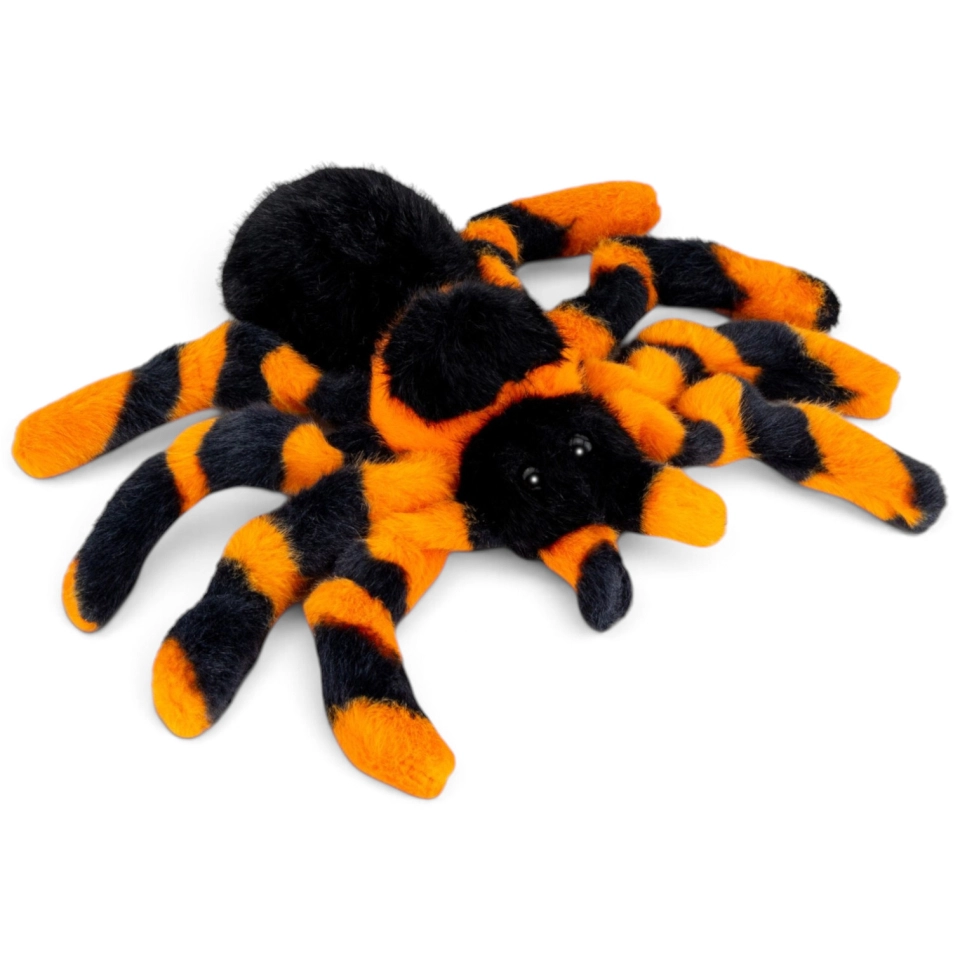
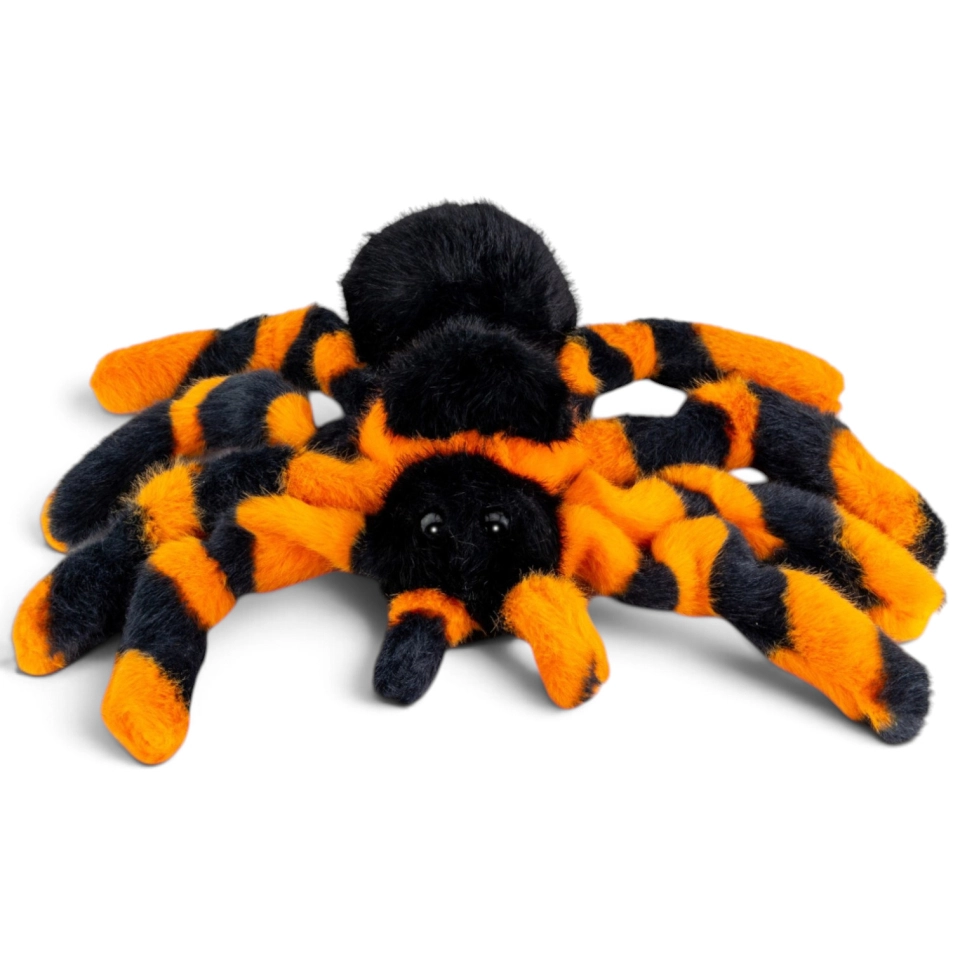
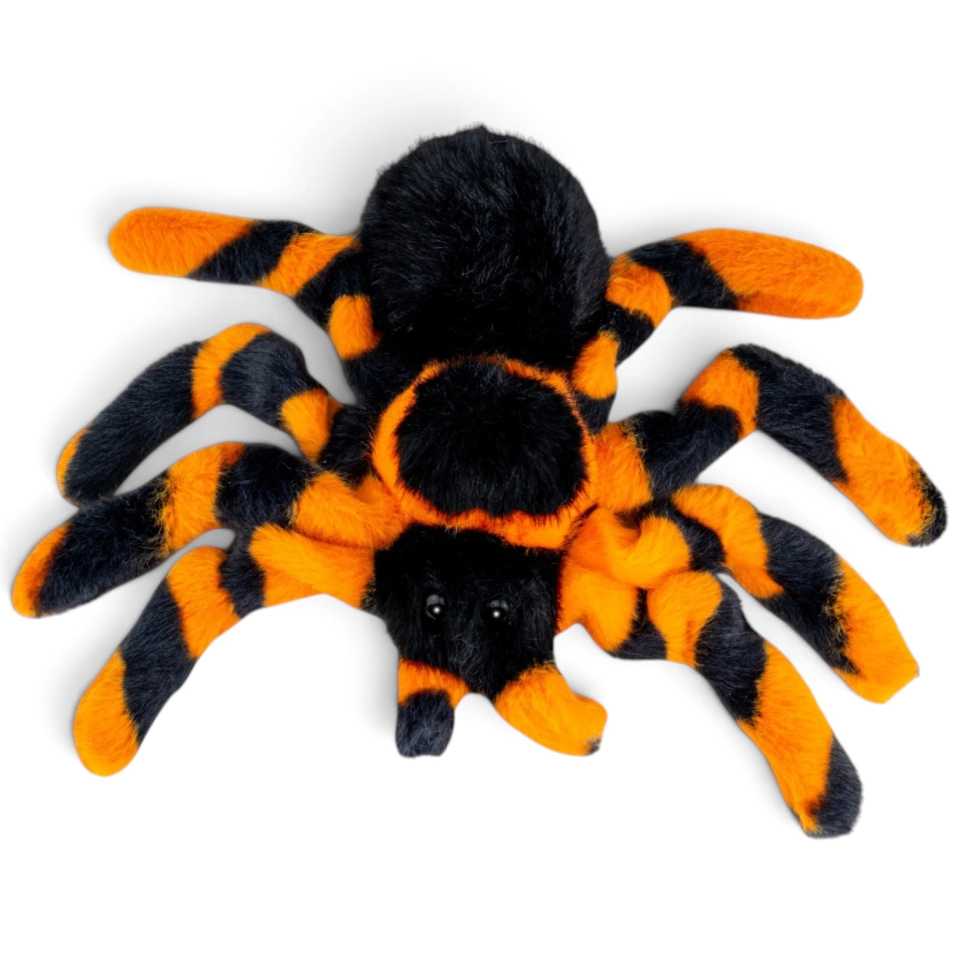
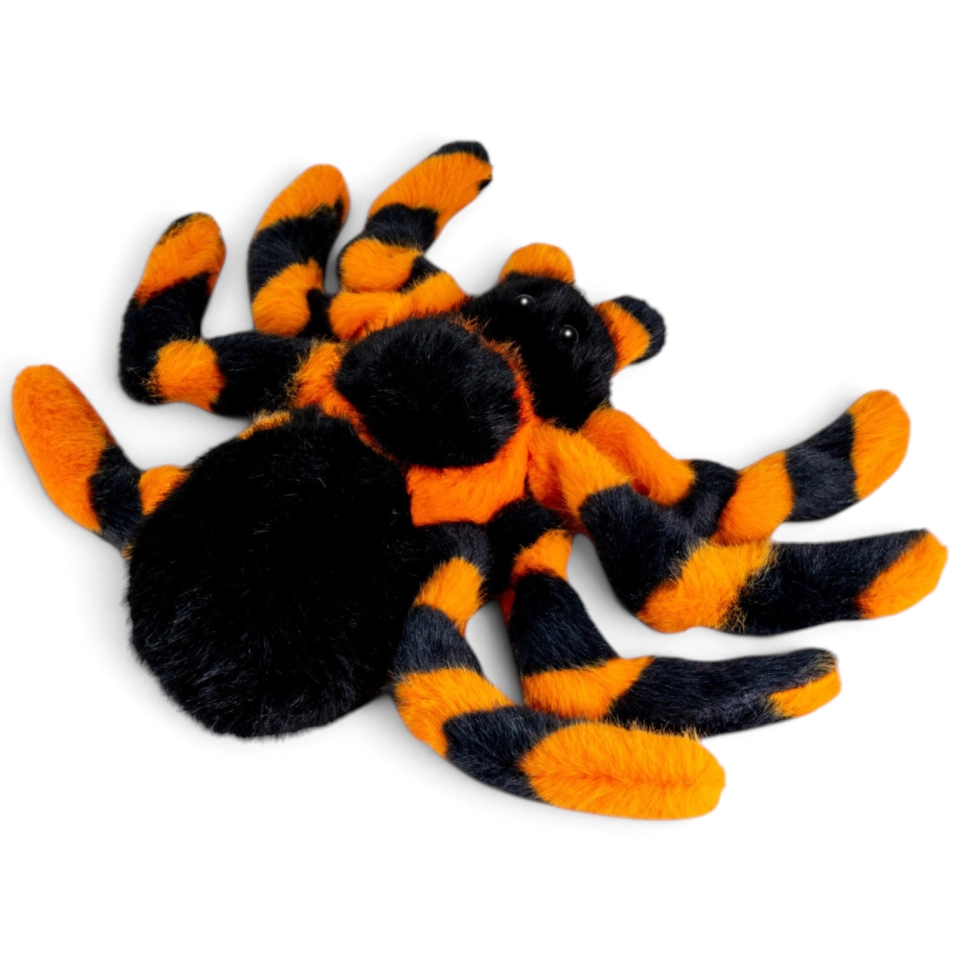
This tarantula is impossible to overlook. Eight widely spread legs frame the compact body, vivid orange alternates with deep black, and the rounded abdomen rises softly behind the lower front section. Two small black safety eyes sit close together and give the face an unexpectedly reserved expression. That contrast is central to the appeal of the Stuffed Animal. Its broad stance is instantly recognisable as a large spider, yet the fluffy surface and rounded shaping remove any harshness from the encounter. From the front, the tarantula looks watchful and composed; viewed from above, the full pattern opens across body and legs. It does not appear ready to spring, only content to wait until curiosity becomes stronger than the first moment of caution.The orange-and-black Soft Toy feels gentler than it looks
Measuring approximately 20 cm long, 18 cm wide and 5 cm high, the tarantula rests in a low, broad position. The outer fur is acrylic with a fluffy, pleasantly dense feel. Polyester fibre and granule filling create a softly yielding body with a little noticeable weight. This allows the abdomen and legs to settle comfortably without becoming rigid. The Soft Toy can be lifted, held and explored gently along the separate sections of each leg. Bright orange bands cross the black limbs, while further orange areas define the borders and transitions around the body. Hand washing is recommended for care. The Cuddly Toy remains every bit as unusual as the living animal that inspired it, yet in the hands it feels far more welcoming than its eight-legged appearance may first suggest.A tarantula grows by leaving its old skin behind
A living tarantula can grow only by moulting. Its outer skeleton cannot expand permanently, so the spider must loosen and shed the old covering at intervals. Before a moult, it often withdraws and eats less. During the process, a tarantula commonly lies on its back, which can look alarming to someone unfamiliar with the behaviour. Afterwards, the new outer covering is soft and particularly vulnerable. It hardens gradually, and the fangs also need time before they can be used normally again. This quiet, delicate stage contrasts strongly with the powerful appearance of a large tarantula. The Stuffed Animal does not reproduce the process, of course, but its rounded abdomen, hairy body and clearly divided legs recall the distinctive build of these arachnids.Tarantulas hunt without building a large capture web
Many tarantulas live close to the ground in burrows, beneath roots or inside sheltered crevices. They certainly use silk, but usually not to make a large orb web. Silk may line a retreat, stabilise the ground or form fine surfaces through which nearby movement can be detected. Prey is often overcome at close range. Strong mouthparts do the essential work, while the small pedipalps in front of the body help investigate the immediate surroundings. Insects and other small animals make up most of the diet, although very large species may occasionally take larger prey. Despite the familiar name, tarantulas do not regularly hunt birds. Most live alone and avoid unnecessary confrontation. Their success depends less on frantic speed than on patience, strength and remarkably sensitive awareness.As a Cuddly Toy, the tarantula loses its frightening edge
People respond to large spiders in very different ways. Some are fascinated immediately, while others prefer a respectful distance. This soft tarantula offers an inviting middle ground. The Cuddly Toy keeps the eight legs, large abdomen and bold markings, but it cannot dash unexpectedly or disappear behind a cupboard. Its body can be examined calmly, the colour bands followed from joint to joint, and the softness of a spider made from plush can be enjoyed without hesitation. For collectors of unusual animals and anyone interested in crawling creatures, the tarantula has clear character. Its gentle humour comes directly from the pose: it looks capable of setting off at any moment, yet has apparently chosen permanent and exceptionally comfortable stillness.Orange and black give the tarantula a presence all its own
The colour scheme makes this spider a striking focal point without giving it an aggressive expression. Orange glows across the legs, around the joints and along sections of the body, while black dominates the abdomen and much of the front. Different details take the lead from each viewing angle. Seen from above, the pattern has an almost graphic clarity; from the side, the softly rounded shaping becomes more obvious. As a Stuffed Animal, the tarantula can sit naturally among realistic wildlife or add an unusual colour accent elsewhere in the home. Beside familiar dogs, cats or woodland animals, it keeps its identity without exaggeration. It has not been turned into a generic sweet creature. It remains recognisably spider-like, and that honesty is precisely what makes it so appealing.The tarantula’s rounded abdomen holds an unexpected detail
The rounded abdomen is more than the strongest visual feature of this tarantula. Recycled plastic is used in the filling; polyester fibre and granules help support the low, softly settled body and its pleasantly noticeable weight. The specific recycling statement applies to the filling, not automatically to the acrylic fur or the whole product. In the hands, that factual detail remains unobtrusive. What can be felt is the gentle give of the abdomen and softly divided legs; what remains visible is the vivid orange and black. The recycled component therefore belongs naturally within this Cuddly Toy without taking attention away from the tarantula itself: unusual, fluffy and unmistakable on all eight legs.The tarantula remains unmistakable, and that is precisely what makes it appealing
This tarantula from the Carl Dick Collection at Plueschtier.de brings respect for an impressive group of animals together with the warmth of a soft companion. The Soft Toy shows the familiar eight legs, a clearly defined front section and a large rounded abdomen while remaining pleasant to hold. For spider enthusiasts, it is an instantly recognisable animal for a collection; for curious children and adults, it offers an approachable encounter with an uncommon crawling creature. Pick it up and the experience unfolds in stages: first the broad span, then the soft surface, and finally the many orange-and-black details. That progression is part of its charm. A moment of hesitation becomes interest, interest becomes closeness, and the tarantula begins to feel surprisingly natural in the home.Cuddly Toy Facts – Size, Material & Important Information at a Glance
High quality, Realistic designLength: 20cm/8 inches
Width: 18cm/7 inches
Height: 5cm/2 inches
Eco-Friendly Material:
Fur: acrylic
Filling: polyester fiber and granulate filling
Black safety eyes
Hand washing is recommended for this Cuddly Toy. Please also follow the care instructions attached to the product.
This Plush Toy is part of the Carl Dick Collection. The history of the company dates back to the mid-1950s; Stefan Imberi took over the business in 1991, and its headquarters have been in Garmisch-Partenkirchen, Germany, since 2010.
Barcode: 4066284038357
Age Recommendation: For children from 0 months
Manufacturer:

Carl Dick GmbH Import und Export
Brauhausstr. 13
82467 Garmisch-Partenkirchen
Deutschland
www.carl-dick.de
Responsible Person:
Carl Dick GmbH Import und Export
Brauhausstr. 13
82467 Garmisch-Partenkirchen
Deutschland
www.carl-dick.de


