Wolves as Soft Toys – a Small Pack for Grand Wilderness Stories
Sitting Wolf, Cuddly Toy, Plush Toy, approx. 28 cm
Upright ears, a warm gaze and a bushy tail with a quiet hint of the wild
This wolf looks more ready to listen than to howl
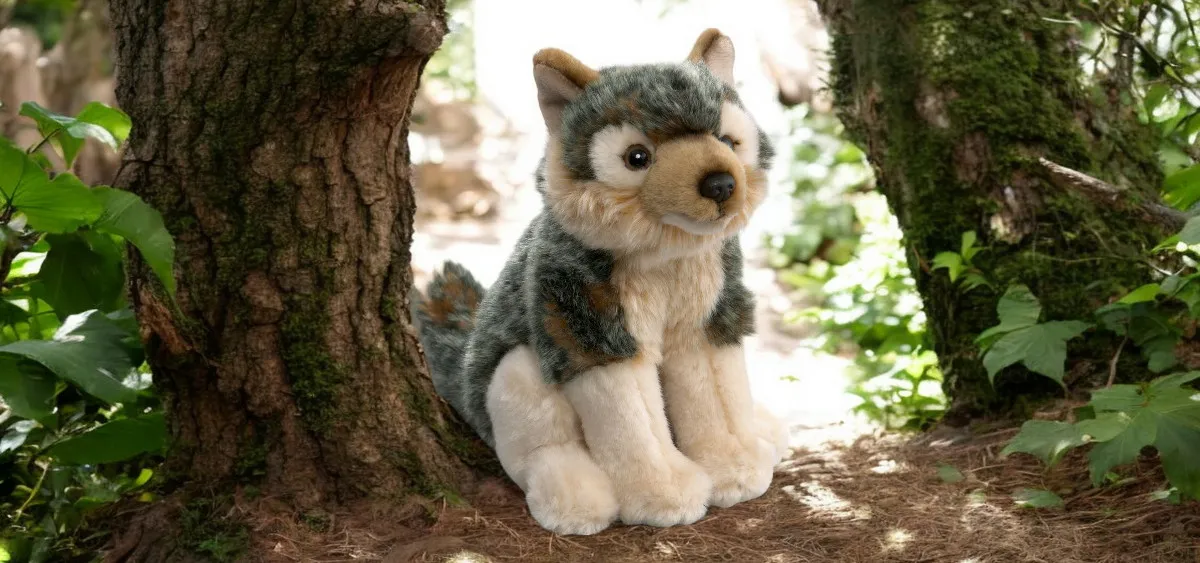
Tall ears rise above the dark, mottled head, yet the face looks entirely calm. Golden eyes, a black nose and a rounded pale muzzle give the sitting wolf an open, patient expression. Lighter cheeks frame the face like a small ruff, while brown, grey and beige tones mingle across the forehead and back. The Cuddly Toy carries the look of a wild animal without losing its gentle character. Part of the Carl Dick Collection on Plueschtier.de, the wolf appears to notice its surroundings without demanding attention. The Plush Toy needs neither bared teeth nor a dramatic pose to be instantly recognisable.
The wolf’s gaze carries distance yet feels remarkably close
A wolf often fascinates because it suggests freedom, alertness and a certain distance. In this Plush Toy, that impression becomes far more approachable. The upright posture lets the head stand out clearly, while the pale cheeks and rounded muzzle bring warmth to the face. When the wolf is lifted, the softness of the fur and the composed seated shape can both be felt at once. The Cuddly Toy has presence without severity and a natural look without seeming remote. That balance encourages a second glance, especially where the golden eyes meet the darker markings around the head. The wolf recalls the striking character of the living animal while remaining close enough for quiet cuddles and an easy sense of familiarity at home.
The bushy tail makes the wolf distinctive from every angle
From the side, the wolf reveals its long back, upright chest and substantial tail, which trails behind the body and becomes lighter towards the tip. The Stuffed Animal measures approximately 17 cm long, 15 cm wide and 28 cm high. It remains easy to hold, yet its seated posture gives it a pleasing presence. The fur is made from acrylic, with longer dark-streaked sections across the back and lighter areas on the chest, cheeks, legs and paws. Polyester fibre and granulate beads create a soft filling with a gently settled weight. Golden safety eyes, the black nose and fine muzzle markings complete the natural appearance of the Plush Toy.
Real wolves speak with ears, eyes and body posture
Communication between living wolves begins long before a howl is heard. The position of the ears, carriage of the tail, facial expression and body stance can show whether a wolf is relaxed, attentive or tense. Scent, quiet vocalisations and physical contact also matter within the group. Howling is especially useful over distance, helping wolves remain in contact and making a pack audible. The raised ears of this Soft Toy recall the alert body language of the living animal, but the product itself is not given real feelings or abilities. It captures a calm moment: head lifted, gaze forwards and bushy tail resting behind the body.
A wolf pack is often a family shaped by care and cooperation
A wolf pack commonly consists of the parents and their young of different ages. The animals travel and rest together, while older family members help care for the pups. Young wolves learn through observation, play and close contact with the group. Cooperation matters because finding food, protecting the family and raising the young are easier together. Each wolf nevertheless remains a powerful wild animal with keen senses and a strong need to move. The Plush Toy does not possess these behaviours, but its calm seated posture gently echoes the closeness of a wolf family. It looks patient and attentive without trying to claim every glance.
This house wolf keeps its territory remarkably modest
A living wolf may roam across a vast landscape. This Stuffed Animal is far less demanding. A place beside a book, on a chest of drawers or among other wild animals is quite sufficient. Only the bushy tail suggests that a little extra room has already been reserved. There are no paw prints in the hallway, no night-time journeys and no interest in the fridge. Even so, the wolf keeps its alert appearance. The Cuddly Toy does not look sleepy, merely calmly present. That is where its dry humour lies: it seems to take the room very seriously, although its most demanding occupation is probably remaining convincing during a quiet break.
Wild in expression and gentle enough for quiet closeness
The appeal of this wolf lies in the contrast between wild animal and comforting companion. Dark-streaked fur, pale cheeks, pointed ears and the long tail recall the living species, while the rounded body and soft surface invite closeness. As a Plush Toy, the wolf adds character to a collection of realistically styled animals without appearing cold or stern. As a Soft Toy, it can share a quiet pause, sit between animal books or remain wherever its attentive gaze can be appreciated. Warm coat colours and golden eyes lend personality, while the upright posture gives the wolf a composed presence. The result is a gentle animal with a trace of wilderness, sharing the peaceful side of the room rather than the distant forest.