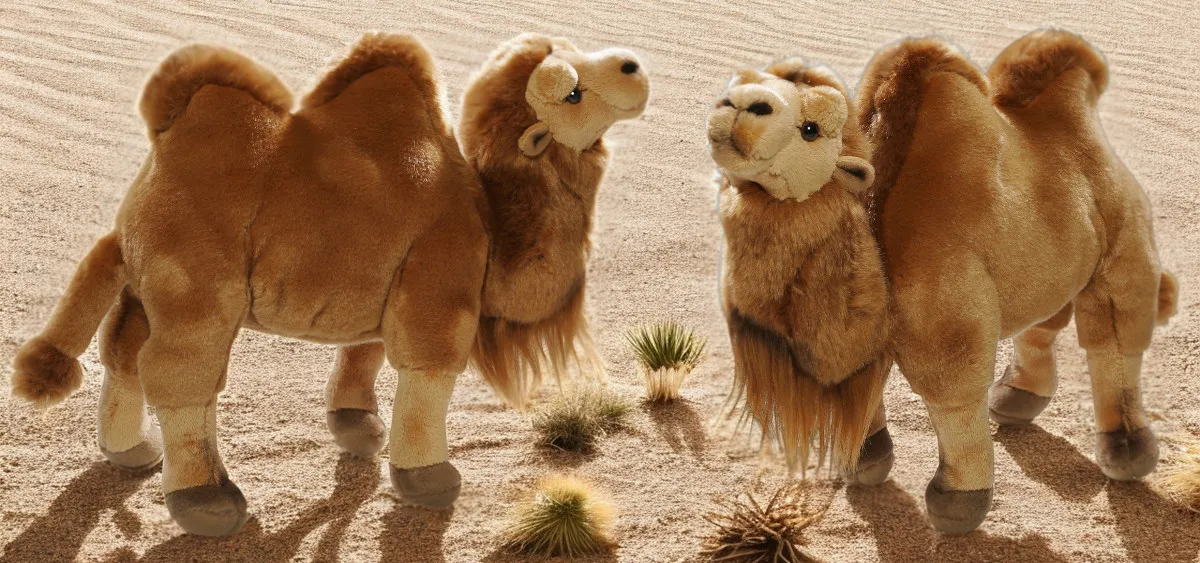
Camel Soft Toys on Caravan Trails – One Hump or Two between Desert and Steppe
Dromedaries and Bactrian Camels Receive Clearly Distinct Plush Toy Portraits in the Carl Dick Collection
Long Legs, Padded Feet and a Curving Neck Shape the Camel Soft Toy
A camel has a body shape that stands out immediately, even as a Soft Toy. Its long curving neck, slender legs, comparatively small head and broad padded feet create a high-legged silhouette with a clear desert connection. The most important difference appears along the back: a dromedary has one hump, while a Bactrian camel has two. The denser and longer coat of a Bactrian camel can also give it a fuller appearance, whereas the dromedary usually looks lighter and more slender. A camel Cuddly Toy captures these features through its proportions, coat effect and posture. Children discover a travelling companion for imagined caravans, oases and journeys across broad landscapes. Adults appreciate camel Plush Toys as characterful animal portraits, personal keepsakes or additions to a wildlife collection. Several Cuddly Toys can place dromedaries and Bactrian camels side by side, while a single Plush Toy claims an individual place on a shelf, sofa or beside the bed through its neck, legs and distinctive hump profile.
Hot Deserts and Cold Steppes Present Dromedaries and Bactrian Camels with Different Challenges
Dromedaries and Bactrian camels are adapted to different dry landscapes. The one-humped dromedary is closely associated with the warm deserts and semi-deserts of North Africa, the Arabian Peninsula and neighbouring regions. The two-humped Bactrian camel comes from Central Asia, where its habitat includes dry plains, stony deserts, steppes and cold winters. Its denser coat suits considerable changes in temperature, while the more slender form of the dromedary is especially familiar from hot sandy landscapes. Camels have accompanied people for thousands of years as riding, pack and transport animals. They carried goods along extensive routes, connected settlements and enabled journeys through regions where many other large domestic animals reached their limits far more quickly. A camel Soft Toy therefore recalls more than dunes and oases. It also represents a long shared history of people, animals and travel routes. For children, this creates stories about caravans and resting places, while collectors recognise in the Plush Toys two different camel types with distinct geographical backgrounds and body shapes.
Fat in the Hump and Careful Water Use Support Long Journeys
The familiar hump of a camel is not a storage tank filled with water. It consists mainly of fatty tissue and provides a concentrated energy reserve when food becomes scarce. Other parts of the body reveal further adaptations to dry and windy landscapes. Camels can largely close their nostrils, long eyelashes protect the eyes from blowing sand, and broad soles spread their weight across loose ground. The split upper lip is flexible and helps the animal select dry grasses, shrubs and other available plants. Dromedaries and Bactrian camels are social animals and often travel together in groups. A Cuddly Toy cannot reproduce these abilities, but it can present their visible features convincingly. A slightly raised head makes the Plush Toy look attentive, long legs recall enduring steps and a clearly shaped hump gives the Soft Toy instant recognition. The result is an animal portrait that does not rely only on a familiar desert image, but also reflects build, feeding and movement.
Camel Cuddly Toys at Plueschtier.de alongside Related Hump-Free Camelids
At Plueschtier.de, the camel motif has its own place within the wildlife categories. In the selection from the Carl Dick Collection, the Bactrian camel represents the familiar camel shape particularly clearly through its two-humped back. Alpacas and llamas also appear within the surrounding category selection. They belong to the camel family as well, but have no humps and originate in South America. This allows related animal forms to be compared directly. The camel Cuddly Toy presents long legs, broad feet and a distinctive hump profile, while alpaca and llama Soft Toys take up different coats and body lines. Children can arrange several Cuddly Toys as a travelling group or choose one Bactrian camel as the resident of an imagined desert landscape. Adults may find among the Plush Toys a gift for desert enthusiasts, travellers or collectors of less commonplace animal motifs. The subcategory therefore provides a focused introduction to camels without assigning the Soft Toy only one role. It can become a play companion, animal portrait, collectable or reminder of a memorable journey.
Did you know...
A dromedary has one hump, while a Bactrian camel has two. The humps mainly store fat rather than water. Camels can largely close their nostrils when sand is blowing strongly. Their broad padded feet spread under pressure and make walking on sand or snow easier. The two sides of the split upper lip can move independently and help the animal select sparse vegetation. These five facts explain why only a few details can give a camel Soft Toy such a clear identity. Hump number, foot shape, long eyelashes, the form of the lips and the coat effect provide practical points of reference for its design. A Cuddly Toy is not a teaching model, but it can inspire new questions about dromedaries, Bactrian camels and their way of life. Children discover an exceptionally adapted travelling companion behind the Plush Toy, while adults and collectors may examine camel Plush Toys more closely and recognise the differences that turn a general desert figure into a deliberately chosen animal portrait.
A Camel Plush Toy Becomes a Travelling Companion for Play, Gifts and Collections
A camel as a Plush Toy suits people who appreciate desert animals, travel stories and distinctive silhouettes. Children can give their Soft Toy a name, create dunes from blankets or send several Cuddly Toys away as a little caravan. A two-humped Bactrian camel can accompany stories from cold steppes and stony deserts, while a dromedary is especially well suited to oases, sandy routes and warm landscapes. Adults may associate camels with a journey, a memorable animal encounter or the long history of ancient trading routes. A camel Cuddly Toy can therefore make a personal gift for travellers, animal enthusiasts and Plush Toy collectors. Among elephants, giraffes, bison and other Soft Toys, the camel remains clearly recognisable through its long neck and characteristic back. A single Plush Toy can equally be chosen as a deliberate decorative animal portrait. The camel Cuddly Toys of the Carl Dick Collection give this enduring traveller an approachable form that can accompany imaginative play, collecting pleasure and personal memories over time.