Capybara Soft Toys Follow the Shorelines through South America’s Grasslands and Wetlands
The Carl Dick Collection Presents Capybaras as Sociable Soft Toys between Shoreline and Grassland
High-Set Eyes and Partly Webbed Feet Give Capybara Cuddly Toys a Clear Profile
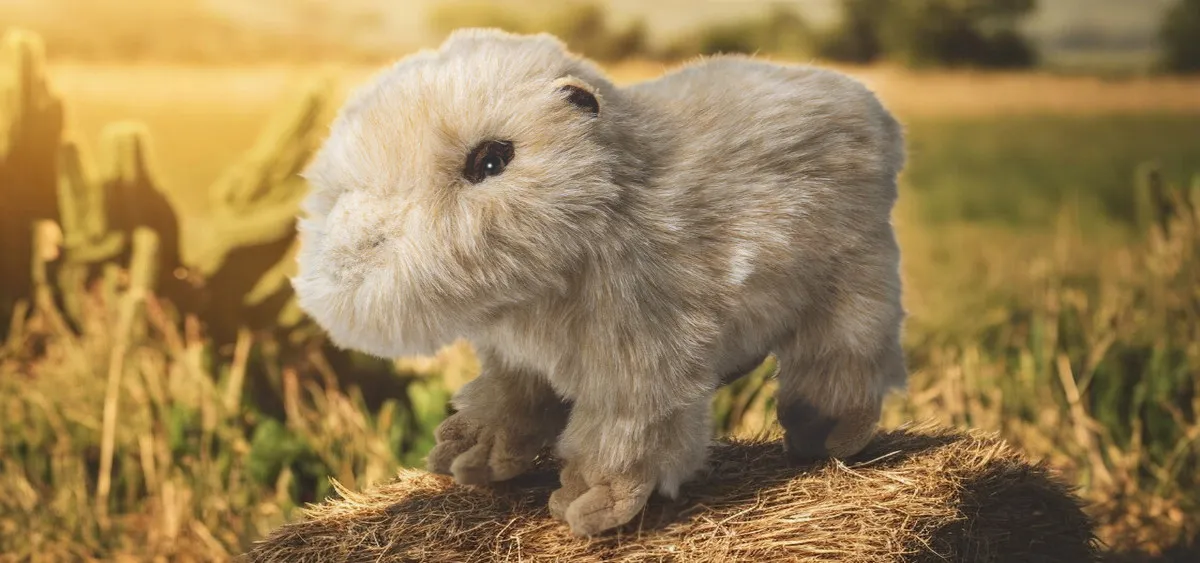
The capybara has a sturdy, almost barrel-shaped body that differs clearly from many other rodents. A broad head, blunt muzzle, small rounded ears and short, powerful legs create a low-set silhouette. The coat ranges from reddish brown to darker earthy shades and appears coarse rather than dense. The position of the eyes, ears and nostrils high on the head is especially striking. This allows a capybara to watch its surroundings and breathe while much of the body remains in the water. The toes are partly webbed and support confident movement while swimming. There is no long externally visible tail. These characteristics translate into a compact and approachable Soft Toy form. A Capybara Plush Toy remains easy to recognise through its head profile and body line without looking like a pig or beaver. Several Capybara Cuddly Toys can form a small group beside an imagined riverbank, while one Soft Toy already claims an individual place in a wildlife collection through its unusual rodent shape.
Rivers, Marshes and Flooded Savannas Form the Habitat of Capybaras
Capybaras live in South America east of the Andes and are closely connected with landscapes containing water. Riverbanks, lakes, ponds, marshes, damp grasslands and seasonally flooded savannas provide food, cover and dependable escape routes. A capybara spends much of its time grazing on land, yet usually remains within easy reach of water. There it can cool down, swim, dive and seek shelter when danger approaches. Partly webbed toes assist with paddling, while the high position of the eyes, ears and nostrils makes it easier to look across the surface. During swimming, most of the body may remain concealed so that only the upper part of the head is clearly visible. In drier periods, the remaining water sources become especially important because drinking, resting and feeding are concentrated around them. This way of life opens a varied setting for a Soft Toy. A Capybara Plush Toy can wander through tall riverside grass, dive among aquatic plants or explore a South American wetland with other Cuddly Toys. The motif therefore represents not merely a composed sitting pose, but a mobile resident of two closely connected environments.
Group Life, Alarm Calls and Shared Grazing Shape the Capybara Day
Capybaras are social animals and often live in groups containing adult males, several females and young. A community frequently includes around ten individuals, although much larger gatherings can form at important water sources or under particular seasonal conditions. Many sets of eyes and ears help the animals watch their surroundings together. When one capybara notices danger, a barking alarm call can alert the group. Whistles, chirps, grunts, huffs and other sounds also help them remain in contact. Feeding takes up a substantial part of the day. Grasses and aquatic plants form the main diet, supplemented by further plant material. As in other rodents, the incisors continue growing and are worn down while biting and chewing. The young can stand soon after birth and follow the group; being close to several adults gives them additional watchful company. As a Plush Toy, the capybara therefore gains a social background that reaches far beyond the familiar impression of a relaxed animal. Capybara Soft Toys can graze together in play stories, pass on an alarm call or travel through the day as a small riverside community.
Plueschtier.de Brings Together Capybara Plush Toys with a Clear Wildlife Identity
In this Plueschtier.de subcategory, the capybara takes centre stage as a clearly defined wildlife motif within the Carl Dick Collection. The focused category makes it easier for you to find a Cuddly Toy that reflects the compact body, broad head, small ears and short legs of this South American rodent. The animal is not reduced to an internet trend or one amusing pose. A Capybara Soft Toy can accompany stories about riverbanks, group life and feeding, recall a memorable animal encounter or expand a collection of unusual mammals. Beside beavers, coypus, guinea pigs or other Plush Toys, the capybara remains distinguishable through its overall size, head profile and almost absent tail. Children discover in a Capybara Cuddly Toy a companion for waterways and grassland adventures. Adult animal enthusiasts may pay closer attention to the uncommon choice of motif and its connection with South American wetlands. The Soft Toys in this themed world leave room for play, gifts, memories and collecting. Plueschtier.de thus gives the largest living rodent a place of its own, where knowledge of nature and the approachable appeal of a Plush Toy come together naturally.
Did you know...
The capybara is the largest rodent living today. Despite the meaning of its familiar German name, it is not related to pigs but is more closely connected with guinea pigs and other South American rodents. Partly webbed toes together with eyes, ears and nostrils positioned high on the head support life beside and within water. The incisors grow throughout life and are worn down while the animal feeds on grasses and aquatic plants. Capybaras communicate through varied sounds including barks, whistles, chirps, grunts and huffs. These five facts show how closely build, diet and group life are connected in capybaras. They also provide clear design ideas for a Soft Toy: the broad head shapes the face, short legs create the low stance and small ears reinforce the characteristic silhouette. A Capybara Cuddly Toy does not need to be a detailed natural-history model to encourage curiosity about living animals. Even one Plush Toy can prompt conversations about rodents, swimming, wetlands and the importance of social groups. The familiar-looking animal motif therefore gains an accessible natural background alongside its friendly face.
A Capybara Soft Toy Turns Riverside Stories into Personal Gifts and Collectables
A capybara as a Soft Toy suits people who appreciate unusual rodents, South American animal worlds and motifs with a clear silhouette. As a gift, a Capybara Cuddly Toy can recall a wildlife encounter, a journey, a memorable moment beside water or a personal enthusiasm for capybaras. In a child’s room, the Plush Toy becomes a route finder through an imagined marsh, a member of a sociable riverside group or a patient listener during story time. In a collection, the compact body creates a clear contrast with long-tailed rodents, tall savanna animals or streamlined aquatic species. Several Cuddly Toys can form a lively river landscape together, while one Capybara Soft Toy finds its place as a distinctive solo figure on the sofa, shelf or beside nature books. The capybaras of the Carl Dick Collection at Plueschtier.de give a biologically remarkable animal a tangible plush form without limiting it to an impression of calmness. Behind the composed face are powerful incisors, confident swimming, numerous contact calls and a highly social way of life. This connection makes Capybara Plush Toys companions that bring together an interest in nature, personal memories and original riverside stories.